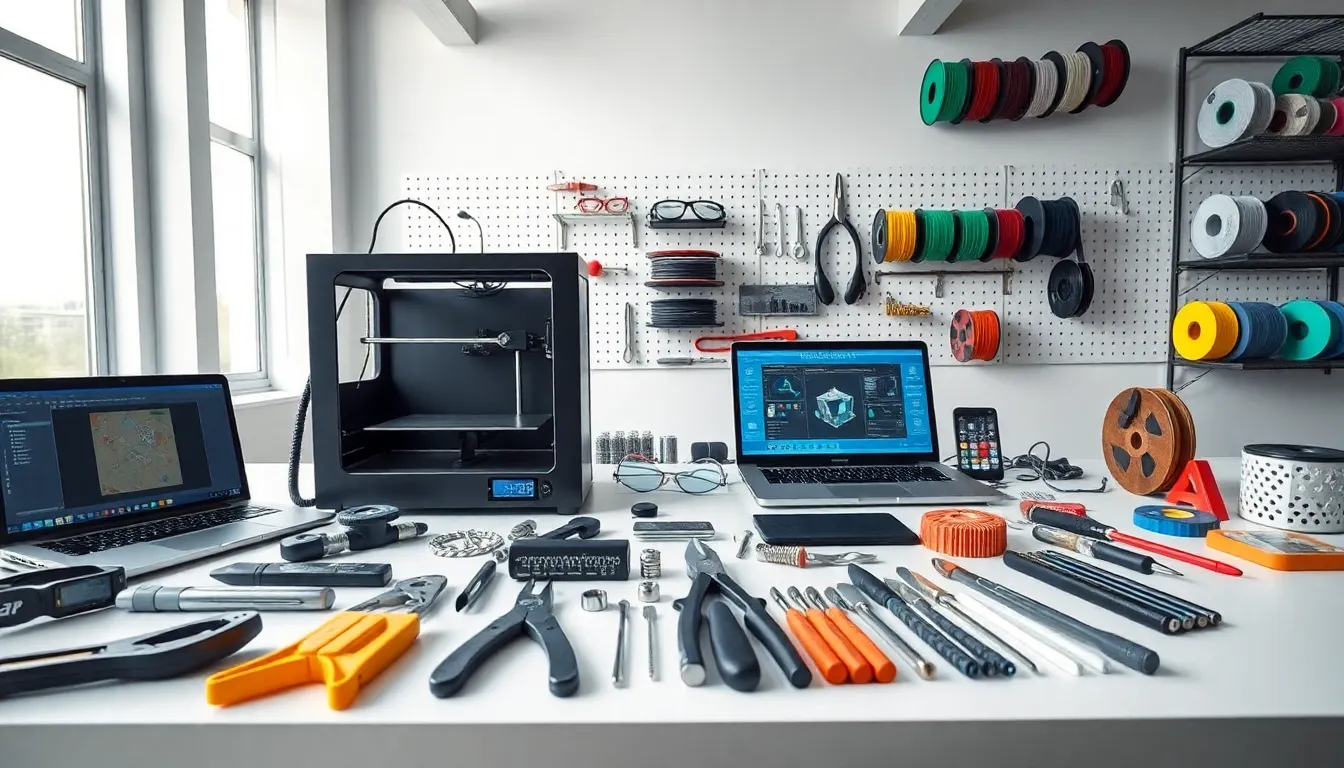
3D printing tools transform a basic printer into a productive workshop. Whether someone prints functional prototypes or artistic models, the right accessories make a significant difference in quality and efficiency. A well-stocked toolkit helps makers prepare designs, remove prints cleanly, maintain equipment, and stay safe during every project. This guide covers the essential 3D printing tools that belong in every maker’s collection, from design software to safety gear.
Table of Contents
ToggleKey Takeaways
- Essential 3D printing tools span four categories: preparation software, print removal equipment, maintenance gear, and safety accessories.
- Digital calipers and slicing software like Cura or PrusaSlicer are must-have 3D printing tools for accurate designs and optimized prints.
- Spatulas, flush cutters, and sandpaper ensure clean print removal and professional surface finishing.
- Regular maintenance with hex keys, nozzle cleaning tools, and lubricants keeps your 3D printer running accurately for years.
- Safety gear including respirators, heat-resistant gloves, and fire extinguishers protects against common printing hazards.
- Stocking spare parts like nozzles and Bowden tubes prevents extended downtime when components fail unexpectedly.
Preparation and Design Tools
Every successful print starts before the first layer touches the build plate. Preparation and design tools help makers create, modify, and optimize their 3D models for printing.
Slicing Software
Slicing software converts 3D models into instructions the printer can follow. Popular options include Cura, PrusaSlicer, and Simplify3D. Each program offers different features for adjusting layer height, infill density, support structures, and print speed. Most makers keep at least two slicers installed since different projects benefit from different software strengths.
CAD Programs
Computer-aided design (CAD) programs let users create original 3D models from scratch. Fusion 360 works well for mechanical parts. Blender handles organic shapes and artistic designs. TinkerCAD offers a simpler entry point for beginners. These 3D printing tools allow complete creative control over every project.
Calipers and Measuring Devices
Digital calipers measure existing objects with precision down to 0.01mm. This accuracy matters when designing replacement parts or creating pieces that must fit together. A good caliper costs between $15 and $40 and becomes one of the most-used 3D printing tools in any workshop.
File Repair Utilities
Downloaded models often contain errors that cause print failures. Tools like Meshmixer and Netfabb repair broken meshes, fill holes, and fix inverted normals. These utilities save hours of troubleshooting and wasted filament.
Print Removal and Surface Finishing Tools
Getting prints off the bed and making them look professional requires specific 3D printing tools. The finishing stage often determines whether a project succeeds or disappoints.
Spatulas and Scrapers
A thin, flexible spatula slides under prints to release them from the build plate. Metal scrapers work on glass and PEI surfaces. Plastic scrapers prevent scratches on magnetic build plates. Many makers keep several sizes handy since different prints need different approaches.
Needle-Nose Pliers
These pliers remove support material from tight spaces. They grip small pieces that fingers cannot reach. A quality pair with spring-loaded handles reduces hand fatigue during long finishing sessions.
Flush Cutters
Flush cutters trim support nubs and excess material close to the surface. They create cleaner cuts than standard wire cutters. This 3D printing tool prevents the gouging and damage that happens with improper cutting tools.
Sandpaper and Files
Sanding removes layer lines and smooths surfaces for painting or assembly. A set of sandpaper ranging from 120 to 2000 grit handles most finishing work. Needle files reach into small details and tight corners where sandpaper cannot go.
Heat Guns and Soldering Irons
Heat guns remove stringing and smooth PLA surfaces. Soldering irons (with dedicated tips) weld broken prints and fill gaps between pieces. These 3D printing tools expand repair and finishing options significantly.
Maintenance and Calibration Equipment
Regular maintenance keeps 3D printers running accurately for years. The right 3D printing tools make upkeep quick and straightforward.
Hex Key Sets
Most 3D printers use hex bolts throughout their construction. A complete metric hex key set (1.5mm to 8mm) covers nearly all adjustment and assembly needs. Ball-end versions allow access at awkward angles.
Nozzle Cleaning Tools
Clogged nozzles ruin prints. Acupuncture needles and cleaning filament clear blockages before they become serious problems. A brass wire brush removes debris from the outside of the nozzle without damaging the surface.
Bed Leveling Aids
Feeler gauges provide precise gap measurements during manual leveling. A sheet of standard printer paper works for basic leveling, but feeler gauges offer repeatable accuracy. Some makers use dial indicators for even more precise calibration.
Lubricants
Linear rails and lead screws need periodic lubrication. White lithium grease works for most applications. PTFE-based lubricants suit high-temperature environments. Proper lubrication prevents wear and keeps motion systems smooth.
Spare Parts Kit
Experienced makers stock spare nozzles, Bowden tubes, thermistors, and belts. These 3D printing tools prevent extended downtime when components fail unexpectedly. A small investment in spares saves days of waiting for shipments.
Safety Gear and Workspace Essentials
3D printing involves heat, fumes, and sharp objects. Proper safety gear protects makers from common hazards.
Respiratory Protection
Printing certain materials releases ultrafine particles and volatile organic compounds. An enclosure with a HEPA filter captures most particles. A respirator with appropriate cartridges adds protection when printing ABS, ASA, or resin. Good ventilation remains essential for any printing space.
Eye Protection
Safety glasses protect against flying debris during finishing work. They also shield eyes from UV light when working with resin printers. Anti-fog coatings help during extended work sessions.
Heat-Resistant Gloves
Hot ends reach temperatures above 200°C. Silicone or leather gloves prevent burns during nozzle changes and maintenance. Thin nitrile gloves protect hands from uncured resin without sacrificing dexterity.
Fire Safety Equipment
A smoke detector near the printer provides early warning of problems. A small fire extinguisher (Class C rated for electrical fires) should stay within reach. Thermal runaway protection in modern printers reduces fire risk, but prepared makers keep safety 3D printing tools accessible.
Organized Storage
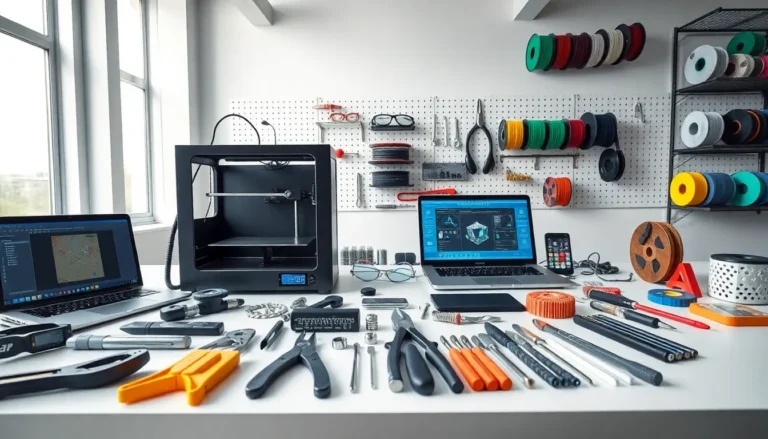
Toolboxes, drawer organizers, and pegboards keep 3D printing tools accessible. Silica gel desiccant protects filament from moisture damage. Proper organization speeds up workflow and extends the life of materials and equipment.