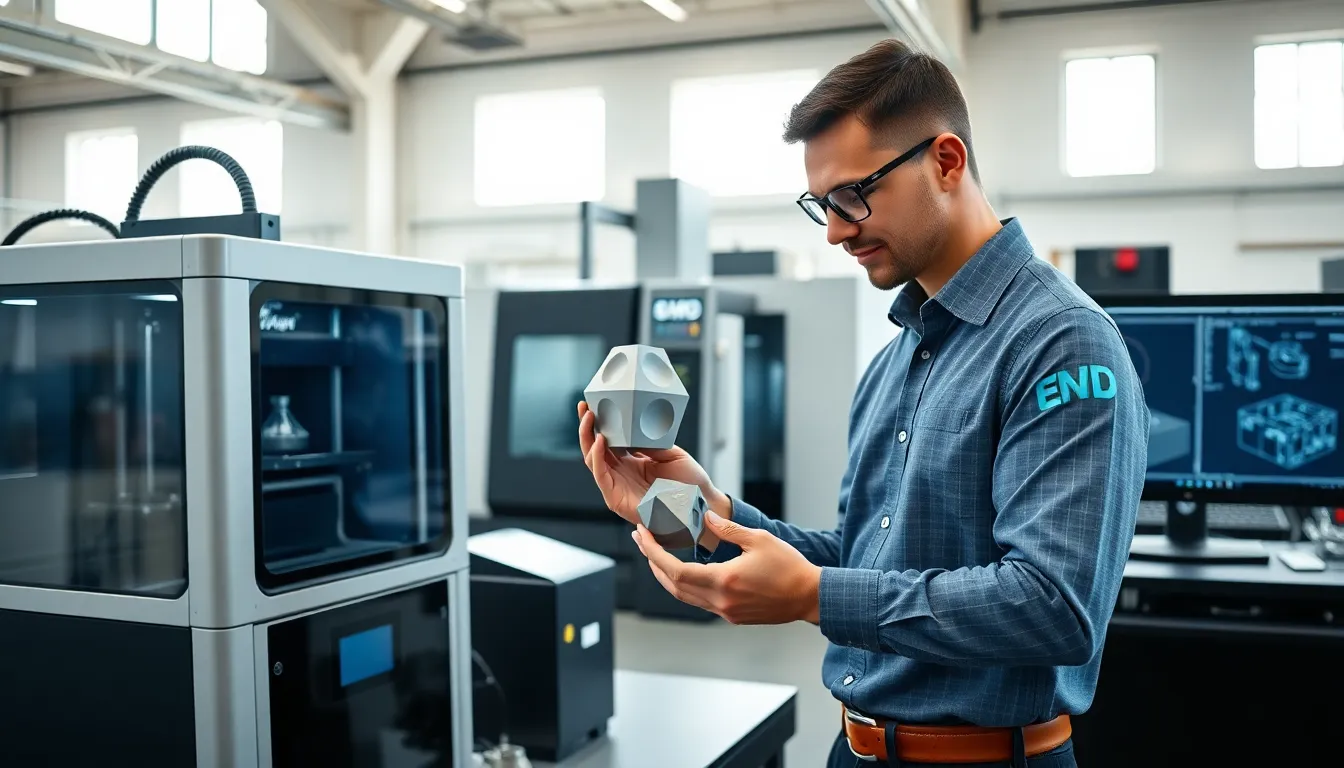
Choosing between 3D printing vs traditional manufacturing affects production costs, timelines, and product quality. Both methods serve different purposes. Traditional manufacturing excels at high-volume production. 3D printing offers flexibility for prototypes and custom parts. This guide breaks down the key differences between these approaches. Readers will learn how each method works, what they cost, and which applications suit them best. The right choice depends on specific project requirements, budget constraints, and production goals.
Table of Contents
ToggleKey Takeaways
- 3D printing vs traditional manufacturing comes down to volume—additive methods excel under 500 units, while traditional methods become cost-effective above 1,000 units.
- 3D printing eliminates tooling costs and reduces time-to-market, enabling overnight prototypes instead of weeks of waiting for molds.
- Traditional manufacturing delivers superior surface finish, tighter tolerances, and more consistent material properties for production-ready parts.
- Complex geometries like internal channels and lattice structures are only achievable through 3D printing without additional costs.
- A hybrid approach works best for many companies—prototype with 3D printing, then switch to injection molding for mass production.
- Material options remain broader for traditional manufacturing, though 3D printing materials continue expanding each year.
How 3D Printing Works Compared to Traditional Methods
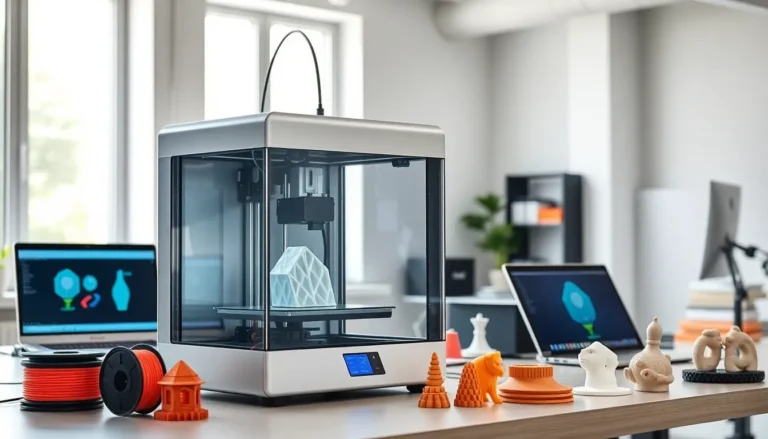
3D printing builds objects layer by layer from digital files. A printer deposits material, usually plastic, resin, or metal, one thin layer at a time. This additive process creates parts from the ground up. No molds or cutting tools are required.
Traditional manufacturing takes the opposite approach. Methods like injection molding, CNC machining, and casting remove or shape material. Injection molding forces molten plastic into pre-made molds. CNC machining cuts away material from solid blocks. These subtractive and formative processes have powered factories for decades.
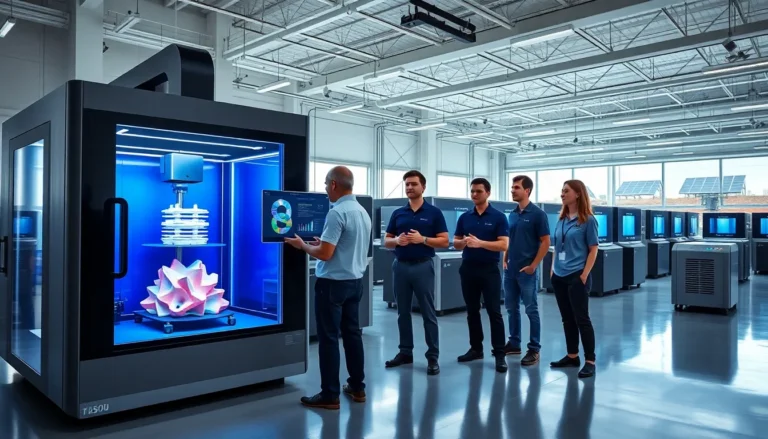
The 3D printing vs traditional manufacturing comparison starts with setup. Traditional methods need tooling, molds, and fixtures before production begins. This preparation takes weeks or months. 3D printing skips this step entirely. A designer uploads a file and starts printing within hours.
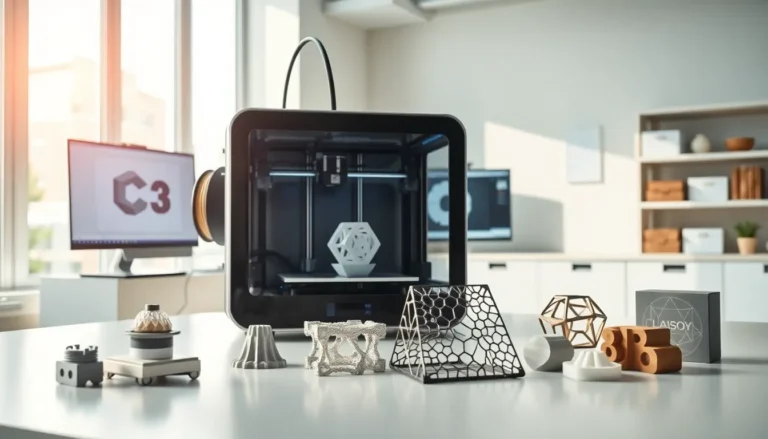
Design freedom separates these methods too. 3D printing creates complex geometries that traditional methods cannot achieve. Internal channels, lattice structures, and organic shapes print without extra cost. Traditional manufacturing struggles with these features or makes them impossible.
But, traditional methods hold advantages in speed for large quantities. Once molds exist, injection molding produces thousands of identical parts per day. 3D printing creates one part at a time. Each print takes hours, making it slower for mass production.
Cost and Time Considerations
Cost structures differ dramatically between 3D printing vs traditional manufacturing. Traditional methods carry high upfront expenses. A single injection mold costs $10,000 to $100,000 depending on complexity. CNC fixtures and tooling add more to the initial investment.
3D printing eliminates tooling costs. The same printer produces different parts without new equipment. This makes 3D printing cheaper for small batches. Producing one to 100 units often costs less with additive methods.
The break-even point matters. Traditional manufacturing becomes cost-effective at higher volumes. After 500 to 1,000 units, the per-part cost of injection molding drops below 3D printing. The exact crossover depends on part size, complexity, and material.
Time-to-market favors 3D printing for prototypes and early production. A prototype prints overnight. The same part might take six weeks through traditional channels while tooling is built. Product teams iterate faster with additive manufacturing.
Labor costs factor into both methods. Traditional manufacturing requires skilled operators for each machine type. 3D printing automates more of the process. One technician can monitor multiple printers simultaneously.
Material costs run higher for 3D printing. Industrial-grade printing filaments and resins cost more per kilogram than injection molding pellets. This gap narrows as the additive manufacturing industry scales up.
Material Options and Quality Differences
Material selection shapes the 3D printing vs traditional manufacturing decision. Traditional methods work with almost any material. Metals, plastics, ceramics, glass, and composites all have established manufacturing processes. Decades of development refined these techniques.
3D printing materials expand yearly but still lag behind. Common options include PLA, ABS, nylon, and PETG plastics. Metal printing uses steel, titanium, aluminum, and specialty alloys. Resin printers offer high-detail parts in photopolymer materials.
Part strength differs between methods. Injection-molded parts have uniform density throughout. 3D printed parts show layer lines and potential weak points between layers. Post-processing improves printed part strength but adds time and cost.
Surface finish quality favors traditional manufacturing. Molded parts emerge smooth and ready for use. Most 3D printed parts need sanding, coating, or other finishing work. High-end industrial printers reduce this gap but don’t eliminate it.
Dimensional accuracy depends on the specific process. CNC machining achieves tolerances of ±0.005 inches routinely. Consumer 3D printers hit ±0.1mm at best. Industrial metal printers approach CNC-level precision at much higher cost.
Material properties also vary. A part injection-molded from nylon behaves differently than the same design 3D printed in nylon. The printing process creates anisotropic properties, strength varies by direction. Traditional methods produce more predictable results.
Best Use Cases for Each Manufacturing Approach
3D printing vs traditional manufacturing isn’t an either-or choice. Each method serves specific applications better.
3D printing works best for:
- Prototypes and proof-of-concept models
- Custom one-off parts
- Low-volume production runs under 500 units
- Complex geometries impossible to mold or machine
- Replacement parts for obsolete equipment
- Medical devices sized for individual patients
- Rapid design iterations during development
Traditional manufacturing excels at:
- High-volume production above 1,000 units
- Parts requiring specific material properties
- Products needing smooth surface finishes
- Components with tight dimensional tolerances
- Consumer goods sold at competitive prices
- Structural parts bearing heavy loads
Many companies use both methods together. They prototype with 3D printing, then switch to injection molding for production. This hybrid approach captures the speed of additive manufacturing and the economics of traditional methods.
Industry also matters. Aerospace and medical sectors adopt 3D printing for lightweight, customized components. Automotive and consumer electronics rely on traditional manufacturing for volume and cost control. Both industries use the opposite method where it makes sense.