
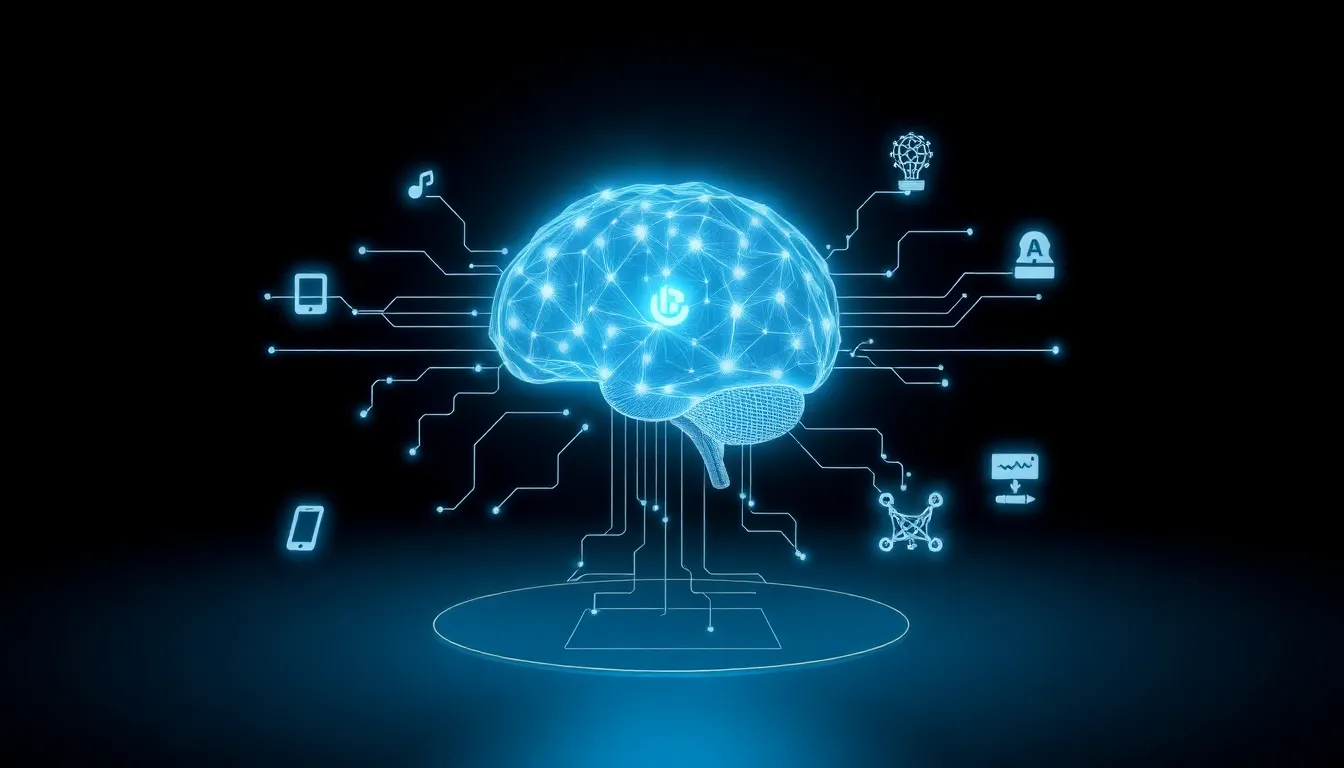
Artificial intelligence refers to computer systems that perform tasks requiring human-like thinking. These systems learn from data, recognize patterns, and make decisions without constant human guidance. AI powers everything from smartphone assistants to medical diagnostic tools. This technology has moved from science fiction into daily reality, affecting how people work, shop, and communicate. Understanding artificial intelligence helps individuals and businesses prepare for a future shaped by smart machines.
Table of Contents
ToggleKey Takeaways
- Artificial intelligence refers to computer systems that perform tasks requiring human-like thinking by learning from data and recognizing patterns.
- AI is classified into three types: Narrow AI (task-specific), General AI (human-level cognition, still theoretical), and Superintelligent AI (beyond human abilities, speculative).
- Machine learning and neural networks form the backbone of how artificial intelligence processes information and improves over time.
- AI powers everyday tools like virtual assistants, streaming recommendations, navigation apps, healthcare diagnostics, and fraud detection.
- Key benefits include faster data processing, improved accuracy, 24/7 availability, and insights from large-scale data analysis.
- Major challenges involve job displacement, algorithmic bias, privacy concerns, and unresolved accountability for AI-driven decisions.
How Artificial Intelligence Works
Artificial intelligence operates through algorithms that process large amounts of data. These algorithms identify patterns and use them to make predictions or decisions.
Machine learning forms the backbone of most AI systems. Computers receive training data, learn from examples, and improve their accuracy over time. A spam filter, for instance, learns to distinguish junk emails by analyzing thousands of labeled messages.
Neural networks take this further. These systems mimic the structure of the human brain, using layers of connected nodes to process information. Deep learning, a subset of machine learning, uses many neural network layers to handle complex tasks like image recognition and language translation.
The process typically follows these steps:
- Data collection from various sources
- Data cleaning and preparation
- Algorithm training on labeled examples
- Testing and validation
- Deployment and continuous improvement
Artificial intelligence systems require significant computing power. Modern AI runs on specialized hardware called GPUs and TPUs, which process calculations much faster than standard computer chips. Cloud computing has made this power accessible to businesses of all sizes.
Types of Artificial Intelligence
Researchers classify artificial intelligence into three main categories based on capability.
Narrow AI (Weak AI)
Narrow AI handles specific tasks extremely well but cannot perform outside its programmed function. Every AI application people use today falls into this category. Voice assistants answer questions. Chess programs play chess. Recommendation engines suggest products. Each excels at one job but fails at others.
General AI (Strong AI)
General AI would match human cognitive abilities across all domains. Such a system could learn any intellectual task a person can perform. This type of artificial intelligence remains theoretical. No general AI exists yet, though researchers continue working toward it.
Superintelligent AI
Superintelligent AI would surpass human intelligence in every field, science, creativity, social skills, and problem-solving. This concept exists only in speculation and raises significant ethical questions about control and safety.
Most discussions about artificial intelligence today focus on narrow AI, since that’s what actually operates in real-world applications. The gap between narrow and general AI remains vast, even though impressive advances in recent years.
Common Applications of AI in Everyday Life
Artificial intelligence touches daily life in ways many people don’t notice.
Virtual assistants like Siri, Alexa, and Google Assistant use natural language processing to understand spoken commands. They set reminders, play music, and answer questions by interpreting human speech.
Streaming services rely on AI to recommend content. Netflix analyzes viewing habits to suggest shows. Spotify creates personalized playlists based on listening patterns. These recommendations keep users engaged and satisfied.
Email and messaging benefit from artificial intelligence too. Gmail’s Smart Reply suggests short responses. Autocomplete features predict what users want to type next.
Navigation apps use AI to calculate optimal routes. Google Maps and Waze analyze traffic data in real time, adjusting directions to avoid delays.
Healthcare has embraced AI for diagnostic support. Algorithms analyze medical images to detect cancers, eye diseases, and other conditions, sometimes more accurately than human doctors.
Financial services deploy artificial intelligence for fraud detection. Banks monitor transactions and flag suspicious activity within seconds.
Online shopping uses AI for product recommendations, chatbots, and dynamic pricing. Retailers personalize the shopping experience based on browsing history and purchase patterns.
These applications demonstrate how artificial intelligence has become embedded in modern infrastructure, working behind the scenes to make services faster and more responsive.
Benefits and Challenges of Artificial Intelligence
Artificial intelligence offers substantial advantages but also presents real concerns.
Benefits
Efficiency gains stand out as the clearest benefit. AI processes information faster than humans, reducing time spent on repetitive tasks. Businesses save money and redirect human workers toward creative problem-solving.
Improved accuracy matters in fields where mistakes cost lives or money. AI diagnostic tools catch diseases earlier. Fraud detection systems prevent financial losses. Quality control algorithms spot manufacturing defects.
24/7 availability gives AI systems an edge over human workers. Chatbots handle customer questions at any hour. Monitoring systems watch for security threats around the clock.
Data analysis at scale enables insights humans couldn’t achieve alone. Artificial intelligence processes millions of data points to identify trends, predict outcomes, and support better decisions.
Challenges
Job displacement worries many workers. Automation threatens roles in manufacturing, customer service, and data entry. New jobs will emerge, but transitions can be painful for affected communities.
Bias in algorithms reflects biases in training data. AI systems have shown discrimination in hiring, lending, and criminal justice when trained on historically biased information.
Privacy concerns arise from AI’s data appetite. These systems require massive datasets, often containing personal information. Surveillance capabilities grow as artificial intelligence improves.
Accountability questions remain unresolved. When an AI system makes a harmful decision, who bears responsibility? Clear legal frameworks haven’t kept pace with technological development.
Balancing these benefits and challenges requires thoughtful regulation, ongoing research, and public engagement with artificial intelligence policy.