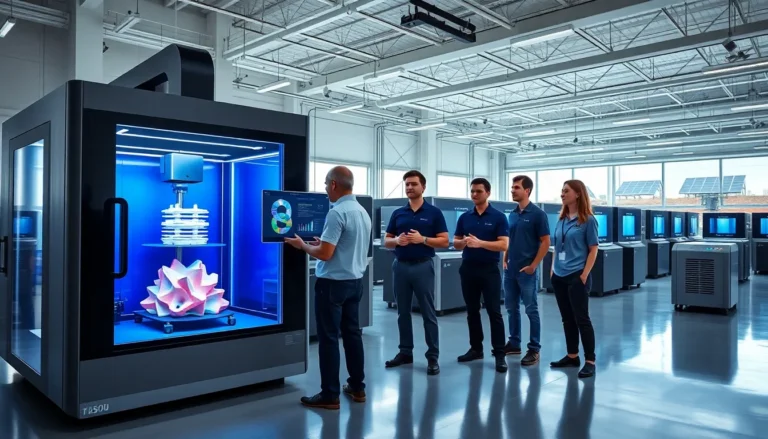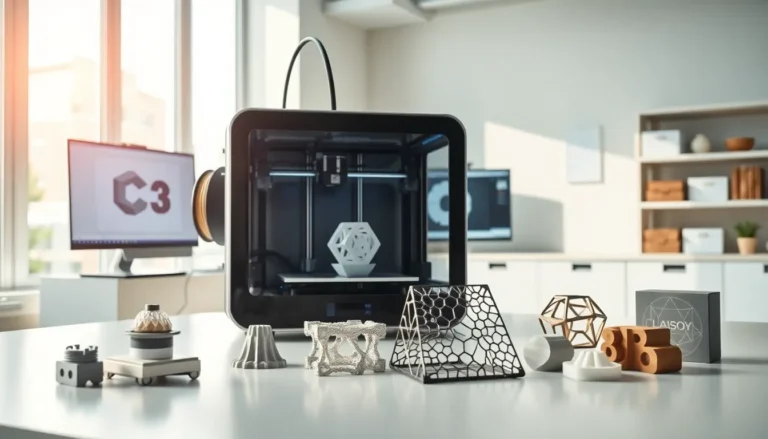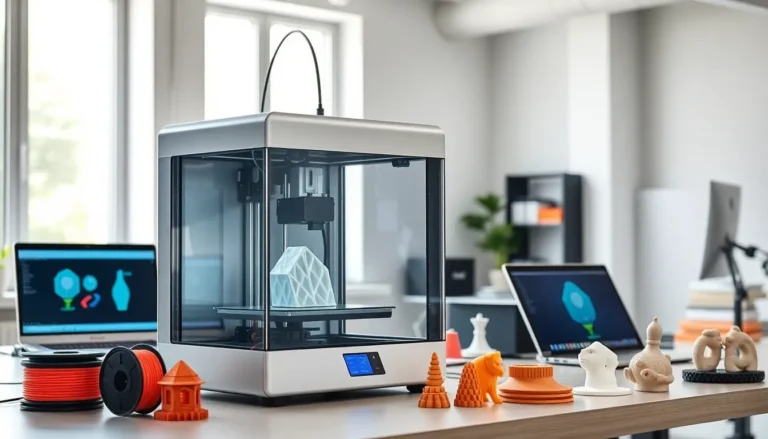
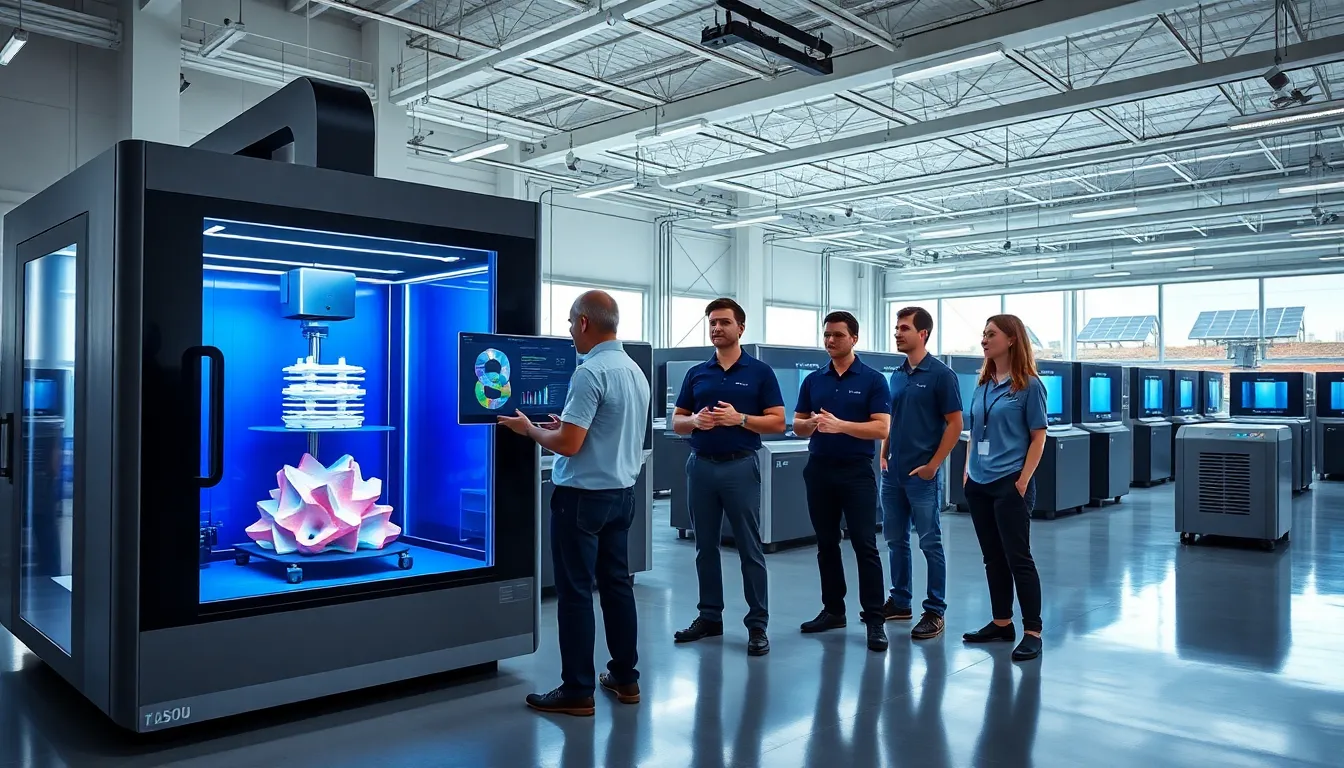
The 3D printing trends 2026 landscape looks set to reshape manufacturing, healthcare, and design. After years of steady progress, the industry now stands at a turning point. Faster machines, smarter software, and greener materials are pushing additive manufacturing into new territory. This article breaks down the key 3D printing trends 2026 will bring, from AI-powered design tools to sustainable production methods. Whether you’re an industry professional or simply curious about the technology, here’s what lies ahead.
Table of Contents
ToggleKey Takeaways
- 3D printing trends 2026 highlight multi-material and full-color printing, enabling complex parts with hard, soft, conductive, and flexible features in a single build.
- AI-driven design tools and real-time print optimization are reducing waste, lowering barriers to entry, and creating lighter, stronger parts faster.
- Sustainable materials like bio-based plastics and recycled powders are becoming standard, with additive manufacturing producing up to 70% less waste than traditional methods.
- Healthcare applications are expanding rapidly, with bioprinters creating patient-specific implants, dental restorations, and even personalized pharmaceuticals.
- Construction 3D printing is gaining traction, with entire homes now buildable in days instead of months at lower cost and with greater design freedom.
- Industrial scalability is improving as print farms, high-speed sintering, and automation push 3D printing into mainstream manufacturing for automotive and aerospace sectors.
Advancements in Multi-Material and Full-Color Printing
Multi-material 3D printing has evolved quickly. In 2026, printers will handle more material combinations in a single build. This means engineers can produce parts with hard and soft sections, conductive and insulating areas, or rigid frames with flexible joints, all without assembly.
Full-color printing is also hitting its stride. New systems deposit color at the voxel level, creating gradients and textures that rival injection-molded products. Consumer goods, medical models, and prototypes benefit most from these capabilities.
Several manufacturers have announced machines that blend metals with polymers. These hybrid outputs open doors for electronics, aerospace components, and custom tooling. The 3D printing trends 2026 clearly favor versatility. Designers no longer need to choose between form and function, they can have both in one print run.
Cost remains a factor, but prices are dropping. Mid-tier multi-material printers now cost roughly 40% less than they did in 2023. As more businesses adopt these systems, economies of scale will push prices lower still.
AI-Driven Design and Print Optimization
Artificial intelligence is changing how objects get designed for 3D printing. Generative design tools now create optimized structures in minutes. These algorithms analyze load requirements, material properties, and manufacturing constraints. The result? Parts that are lighter, stronger, and faster to produce.
AI also improves the printing process itself. Machine learning models predict warping, layer adhesion failures, and thermal distortions before they happen. Print farms use these insights to adjust parameters in real time, reducing waste and failed builds.
In 2026, expect tighter integration between CAD software and AI assistants. Designers will describe what they need in plain language. The software will generate printable files automatically. This shift lowers the barrier to entry for small businesses and hobbyists alike.
Quality control gets smarter too. Vision systems powered by AI scan each layer during printing. They flag defects instantly, allowing operators to intervene or restart without wasting hours of machine time. The 3D printing trends 2026 point toward a more automated, error-resistant workflow.
Sustainable Materials and Eco-Friendly Manufacturing
Sustainability is no longer optional. The 3D printing trends 2026 reflect growing pressure from regulators, consumers, and corporate ESG goals. Material suppliers have responded with bio-based plastics, recycled powders, and compostable resins.
PLA and PETG have long been popular eco-friendly options. Now, manufacturers offer carbon-negative filaments made from agricultural waste and captured CO2. These materials perform well in standard FDM printers and cost only slightly more than petroleum-based alternatives.
Metal printing is catching up. New processes reclaim nearly 95% of unused powder. Closed-loop systems filter and reuse support material, cutting raw material consumption significantly.
Energy efficiency matters too. Modern printers consume less power per part than older models. Some facilities pair solar panels with battery storage to run entire print farms on renewable energy. A 2025 industry report found that additive manufacturing produces up to 70% less waste than traditional subtractive methods for certain part geometries.
Companies that adopt sustainable 3D printing practices often see marketing benefits as well. Consumers increasingly prefer products made with environmental responsibility in mind.
Expanding Applications in Healthcare and Construction
Healthcare remains a major growth area for 3D printing. In 2026, hospitals will use bioprinters to create patient-specific implants, surgical guides, and tissue scaffolds. Custom prosthetics already cost a fraction of traditional options, and they fit better.
Dental labs have largely shifted to additive manufacturing. Aligners, crowns, and dentures come off printers daily. The speed and accuracy of dental 3D printing trends 2026 will only improve, with same-day restorations becoming routine.
Pharmaceutical printing is emerging too. Researchers are developing methods to print pills with precise dosages and release profiles. This could transform personalized medicine.
Construction is another sector to watch. Large-scale concrete printers now build walls, foundations, and even entire homes. Projects in Texas, Dubai, and the Netherlands have demonstrated the technology’s viability. Construction 3D printing trends 2026 focus on speed and cost reduction. A printed home can go up in days rather than months.
The appeal is clear: less labor, less waste, and more design freedom. Curved walls and organic shapes that would be prohibitively expensive with traditional framing become practical with additive methods.
Faster Production Speeds and Industrial Scalability
Speed has always been a criticism of 3D printing. That’s changing. New print heads, laser arrays, and curing systems dramatically reduce build times. What once took 12 hours might now finish in two.
High-speed sintering and binder jetting lead the charge in industrial settings. These technologies process entire layers at once rather than tracing each outline. Throughput increases by orders of magnitude.
Print farms are growing. Companies like Protolabs and Xometry operate hundreds of machines in parallel. Automated material handling, part removal, and post-processing create true lights-out manufacturing. The 3D printing trends 2026 favor this kind of scalability.
Automotive and aerospace industries now rely on additive manufacturing for production parts, not just prototypes. BMW, GE, and SpaceX have integrated 3D printing into their supply chains. As speeds increase and costs fall, more manufacturers will follow.
Standardization helps too. Industry groups are finalizing testing protocols and certification pathways. This gives procurement teams confidence to specify 3D-printed parts for critical applications. The 3D printing trends 2026 reflect an industry maturing into mainstream manufacturing.