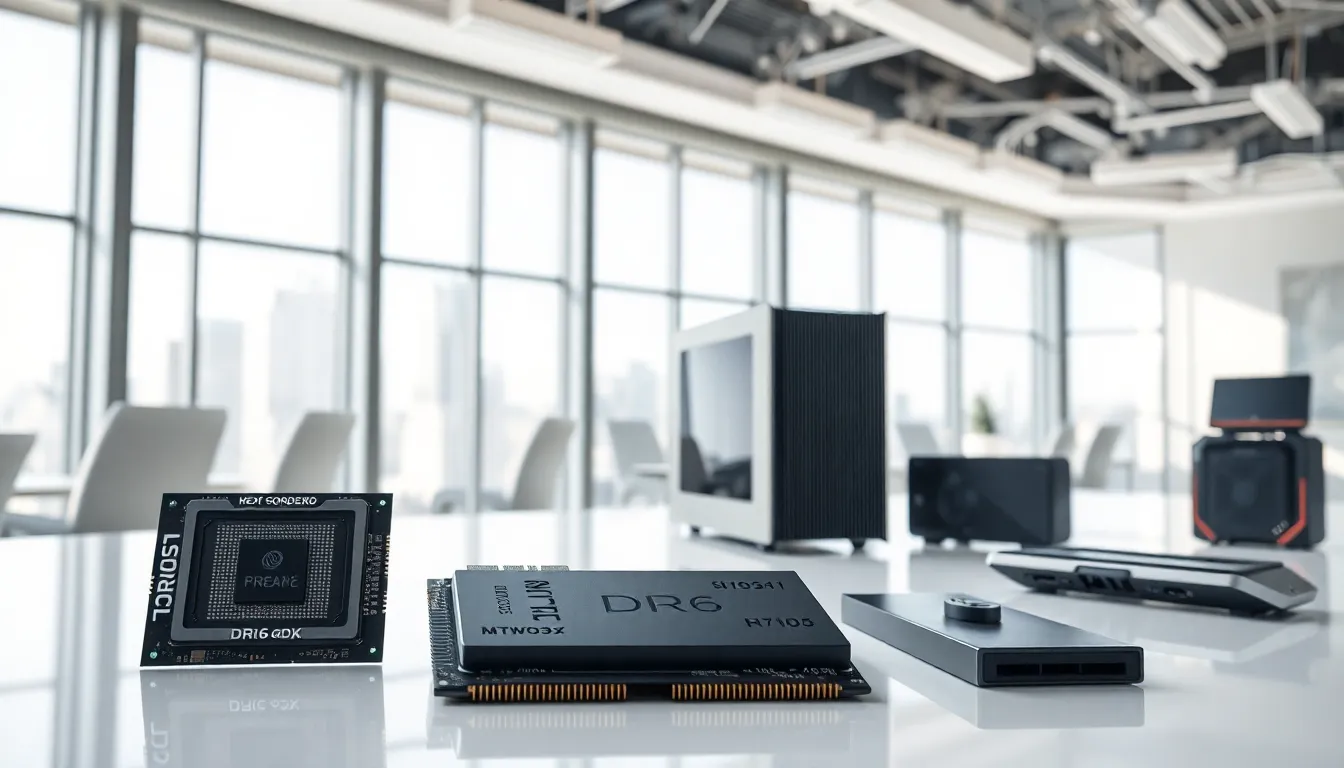
Hardware trends 2026 will reshape how consumers and businesses use technology. From AI-driven processors to sustainable components, the industry is preparing for significant shifts. This year promises faster memory, smarter graphics solutions, and modular designs that prioritize flexibility.
The pace of innovation shows no signs of slowing. Manufacturers are responding to demand for performance, efficiency, and environmental responsibility. Whether building a new PC or upgrading enterprise infrastructure, understanding these hardware trends 2026 will help buyers make informed decisions.
This article breaks down the key developments expected across processors, memory, graphics, sustainability, and form factors. Each section examines what’s changing and why it matters.
Table of Contents
ToggleKey Takeaways
- Hardware trends 2026 bring AI-optimized processors with built-in NPUs to consumer laptops and desktops, making local AI processing mainstream.
- DDR6 memory enters the market with speeds nearly doubling DDR5, while PCIe 6.0 SSDs deliver significant storage performance gains.
- NVIDIA’s RTX 50 series and AMD’s RDNA 4 lead graphics advancements, with 30-40% performance improvements and more affordable OLED monitors.
- Sustainability shapes hardware trends 2026 through 2nm/3nm processors, recycled materials, and modular designs that extend device lifespans.
- Handheld gaming PCs and upgradeable laptops emerge as major growth areas, offering flexibility and reducing electronic waste.
- Thunderbolt 5 docks and DisplayPort 2.1 enable seamless multi-display setups with 8K and high-refresh-rate support through single cables.
The Rise of AI-Optimized Processors
AI workloads are driving processor design in 2026. Intel, AMD, and Qualcomm are all releasing chips with dedicated neural processing units (NPUs) built directly into consumer hardware. These NPUs handle machine learning tasks locally, reducing reliance on cloud computing.
The hardware trends 2026 landscape shows NPUs becoming standard rather than optional. Windows and macOS now include features that require on-device AI processing. Photo editing, voice recognition, and real-time translation all benefit from this shift.
AMD’s next Ryzen generation reportedly includes NPUs capable of 50+ TOPS (trillion operations per second). Intel’s Arrow Lake refresh pushes similar numbers. Apple continues leading with its M-series chips, which already integrate powerful neural engines.
For enterprise users, server-grade processors are adopting similar architectures. Data centers want to run AI inference locally without expensive GPU clusters. This creates demand for CPUs that balance traditional computing with AI acceleration.
The practical impact? Laptops and desktops will handle AI tasks that previously required specialized equipment. Content creators can run local AI models for image generation. Developers can test machine learning projects without cloud costs. Hardware trends 2026 make AI accessible at every price point.
Advances in Memory and Storage Technology
DDR6 memory enters the consumer market in 2026. Early benchmarks suggest speeds exceeding 12,000 MT/s, nearly doubling DDR5 performance. This matters for applications that move large datasets, video editing, 3D rendering, and scientific computing.
The hardware trends 2026 memory sector also brings wider DDR5 adoption at lower prices. As DDR6 launches, DDR5 becomes the mid-range standard. Budget builders finally get access to high-speed memory without premium pricing.
Storage sees equally important changes. PCIe 6.0 SSDs begin shipping to consumers, offering theoretical speeds up to 128 GB/s per lane. Real-world performance won’t hit those numbers immediately, but even early PCIe 6.0 drives should outpace current Gen 5 options significantly.
Capacity continues climbing too. Consumer NVMe drives now commonly reach 8TB, with 16TB options available for prosumers. The price per gigabyte keeps dropping as manufacturing scales.
CXL (Compute Express Link) technology also gains traction. This standard allows memory pooling across systems, letting servers share RAM resources dynamically. Data centers benefit most, but the technology could eventually reach high-end workstations.
These hardware trends 2026 mean faster load times, smoother multitasking, and better handling of large files. Both casual users and professionals will notice the difference.
Next-Generation Graphics and Display Hardware
NVIDIA’s RTX 50 series dominates graphics hardware trends 2026 discussions. The Blackwell architecture promises major gains in ray tracing and AI-powered upscaling. Early reports suggest 30-40% performance improvements over the RTX 40 series at similar power levels.
AMD responds with RDNA 4, focusing on efficiency and competitive pricing. The company targets the mid-range segment where most gamers actually buy. Expect strong 1440p performance without flagship prices.
Intel’s Arc continues maturing. Third-generation Battlemage cards address driver issues that plagued earlier releases. Intel positions itself as the value option, offering decent performance at budget-friendly costs.
Display technology advances alongside GPUs. OLED monitors become more affordable as production scales. Mini-LED backlighting improves on LCD panels, offering better contrast than traditional options.
Refresh rates push higher too. 360Hz becomes common for competitive gaming monitors, while 240Hz enters mainstream price brackets. Hardware trends 2026 also bring wider adoption of DisplayPort 2.1, enabling 8K at 60Hz or 4K at 240Hz through a single cable.
For professionals, color-accurate OLED displays finally reach reasonable prices. Video editors and photographers gain access to reference-grade monitors without spending $3,000+. The gap between consumer and professional displays narrows considerably.
Sustainable and Energy-Efficient Components
Environmental concerns shape hardware trends 2026 significantly. Manufacturers face pressure from regulations and consumers to reduce waste and energy consumption.
Processor efficiency improves dramatically. New fabrication processes at 2nm and 3nm nodes deliver more performance per watt. A 2026 laptop can match 2024 desktop performance while using half the power. This extends battery life and reduces cooling requirements.
Power supply units adopt newer efficiency standards. ATX 3.1 and 12VHPWR connectors become standard, improving power delivery to hungry components. Titanium-rated PSUs, previously reserved for servers, appear in enthusiast builds.
Recycled materials appear in more products. Dell, HP, and Lenovo now use ocean-bound plastics and recycled aluminum in laptop chassis. Some manufacturers offer take-back programs, refurbishing old components for resale or recycling.
Modular designs support sustainability too. Repairable laptops let users replace batteries, screens, and storage without specialized tools. Framework Computer pioneered this approach, and larger manufacturers now follow.
Hardware trends 2026 show the industry treating efficiency as a feature rather than an afterthought. Lower power bills, longer device lifespans, and reduced e-waste benefit everyone.
Emerging Form Factors and Modular Designs
Traditional PC shapes are evolving. Mini-ITX and small form factor builds gain popularity as components shrink. A gaming PC now fits in a shoebox-sized case without sacrificing performance.
Handheld gaming PCs represent major hardware trends 2026 growth areas. Following the Steam Deck’s success, competitors flood the market. ASUS, Lenovo, and MSI all offer portable Windows gaming devices. These handhelds pack desktop-class AMD and Intel chips into Nintendo Switch-sized bodies.
Laptops embrace modularity. Companies like Framework prove that upgradeable notebooks attract buyers. Users swap GPUs, RAM, and ports without replacing entire machines. This approach extends product lifecycles and reduces electronic waste.
Docking stations become more capable. Thunderbolt 5 docks support dual 4K displays at high refresh rates, multiple USB ports, and fast charging through a single cable. Remote workers connect laptops to full desktop setups instantly.
All-in-one computers also improve. New models hide powerful components behind thin displays. These machines suit offices and homes where desk space matters.
Hardware trends 2026 emphasize flexibility. Buyers want devices that adapt to different situations rather than single-purpose machines. Manufacturers respond with creative designs that blur traditional category lines.