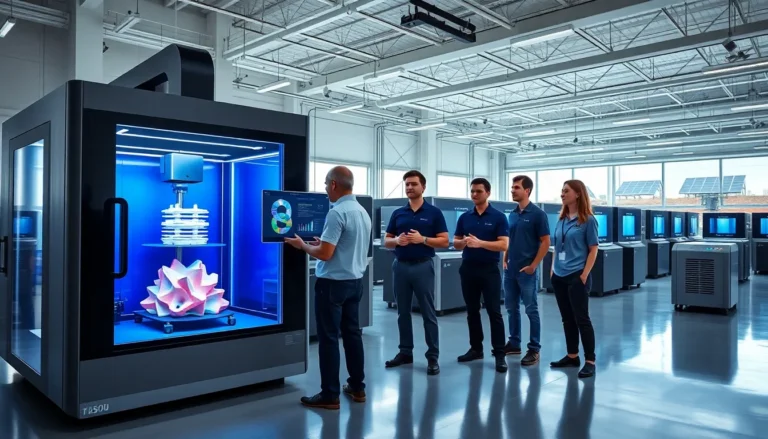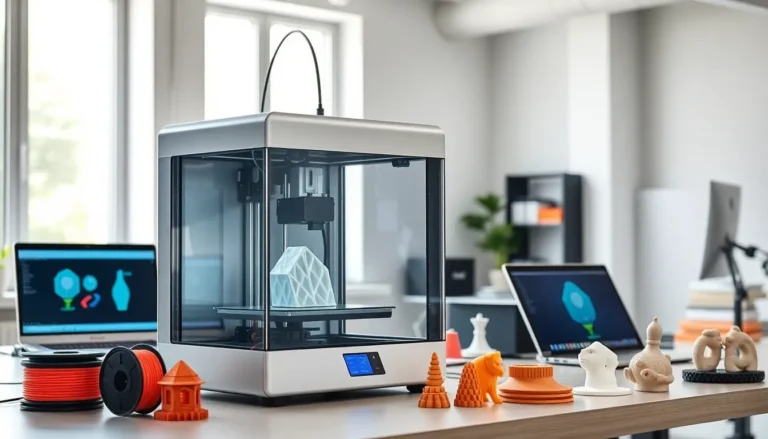

Top 3D printing technologies have transformed how industries manufacture products, create prototypes, and solve complex design challenges. In 2025, these technologies offer faster speeds, better precision, and more material options than ever before. From aerospace components to medical implants, 3D printing now serves critical functions across dozens of industries.
This guide covers the leading 3D printing technologies available today, their best applications, and how to select the right printer for specific needs. It also explores the trends shaping this industry’s future.
Table of Contents
ToggleKey Takeaways
- Top 3D printing technologies in 2025 include FDM, SLA, SLS, MJF, and DMLS—each suited to different materials, precision levels, and production needs.
- FDM remains the most accessible option for hobbyists and educators, while SLA and DMLS deliver superior precision for medical and aerospace applications.
- Industries from healthcare to aerospace rely on 3D printing for custom implants, lightweight components, and rapid prototyping.
- When choosing a 3D printer, evaluate purpose, material compatibility, build volume, resolution, and total cost of ownership.
- Emerging trends like AI-powered software, faster print speeds, and sustainable materials are shaping the future of top 3D printing technology.
- Distributed manufacturing through 3D printing allows companies to produce parts closer to customers, reducing logistics costs and delivery times.
Leading 3D Printing Technologies
Several top 3D printing methods dominate the market in 2025. Each technology uses different processes, materials, and techniques to build objects layer by layer.
Fused Deposition Modeling (FDM)
FDM remains the most widely used 3D printing technology. It works by heating thermoplastic filament and depositing it through a nozzle onto a build platform. The printer creates objects one layer at a time. FDM printers are affordable, easy to operate, and work with materials like PLA, ABS, and PETG.
This technology suits hobbyists, educators, and businesses that need functional prototypes quickly.
Stereolithography (SLA)
SLA uses ultraviolet lasers to cure liquid resin into solid plastic. This method produces parts with exceptional detail and smooth surface finishes. SLA is ideal for dental models, jewelry prototypes, and detailed miniatures.
Top 3D printing professionals often choose SLA when precision matters more than speed.
Selective Laser Sintering (SLS)
SLS uses high-powered lasers to fuse powdered materials, typically nylon, into solid structures. This technology creates strong, functional parts without support structures. Manufacturers use SLS for end-use parts, complex geometries, and small production runs.
Multi Jet Fusion (MJF)
HP developed MJF technology, which applies fusing and detailing agents across a powder bed. An infrared lamp then heats the bed to fuse particles together. MJF delivers excellent mechanical properties and produces parts faster than SLS.
Direct Metal Laser Sintering (DMLS)
DMLS creates metal parts by sintering metal powder with a laser. Aerospace, automotive, and medical industries use DMLS to produce titanium implants, aluminum brackets, and steel components. This top 3D printing technology enables designs that traditional machining cannot achieve.
Best Applications for 3D Printing Today
Top 3D printing applications span multiple industries. The technology has moved well beyond simple prototyping.
Healthcare and Medical Devices
3D printing produces custom prosthetics, surgical guides, and dental aligners. Surgeons use printed anatomical models to plan complex procedures. Some companies now print biocompatible implants tailored to individual patients.
Aerospace and Automotive
Aircraft manufacturers print lightweight brackets, fuel nozzles, and interior components. These parts reduce weight and improve fuel efficiency. Automotive companies use 3D printing for rapid prototyping, custom tooling, and low-volume production parts.
Consumer Products
Brands use top 3D printing methods to create custom eyewear, shoes, and jewelry. This allows mass customization, products made to fit individual customers without expensive tooling.
Architecture and Construction
Architects create detailed building models with 3D printers. Some companies have begun printing entire structures using concrete extrusion systems. These projects demonstrate potential cost and time savings for construction.
Education and Research
Schools use affordable FDM printers to teach engineering, design, and manufacturing concepts. Research institutions print custom lab equipment and experimental devices that would otherwise require expensive fabrication.
How to Choose the Right 3D Printer
Selecting the right 3D printer requires matching technology to specific requirements. Several factors should guide this decision.
Define the Purpose
Start by identifying what the printer will create. Hobbyists making figurines have different needs than engineers producing functional prototypes. Medical device companies require biocompatible materials and high precision.
Consider Material Requirements
Different technologies support different materials. FDM works with common thermoplastics. SLA handles specialty resins. SLS and MJF process engineering-grade nylons. DMLS prints metals. Top 3D printing results depend on matching the right material to the application.
Evaluate Build Volume
Build volume determines the maximum size of printed objects. Desktop printers typically offer build volumes around 200–300 mm per axis. Industrial machines provide much larger capacities for big parts or batch production.
Assess Resolution and Surface Quality
SLA and MJF deliver smoother surfaces than FDM. If visual appearance matters, for consumer products or presentation models, choose technologies that minimize visible layer lines.
Calculate Total Cost of Ownership
Printer cost represents just part of the investment. Factor in material costs, maintenance, post-processing equipment, and operator training. Some technologies require ventilation systems or specialized facilities.
Review Speed and Throughput
Production environments need printers that can deliver parts quickly. MJF and SLS typically outpace SLA for batch production. FDM speed varies significantly based on printer quality and settings.
Future Trends Shaping 3D Printing
Top 3D printing technology continues to advance rapidly. Several trends will shape the industry through 2025 and beyond.
Faster Print Speeds
New printer designs and materials are dramatically reducing production times. Some manufacturers now offer printers that complete parts 10 times faster than previous generations. Speed improvements make 3D printing viable for larger production volumes.
Expanded Material Options
Material science breakthroughs deliver new polymers, metals, ceramics, and composites for 3D printing. High-temperature plastics, flexible elastomers, and conductive materials expand what designers can create.
AI-Powered Software
Artificial intelligence now assists with design optimization, print preparation, and quality control. AI algorithms suggest improvements to part geometry, predict print failures, and automate support structure generation.
Sustainability Focus
Top 3D printing companies increasingly emphasize recycled and bio-based materials. Some systems now recycle failed prints and support material back into usable feedstock. This reduces waste and material costs.
Distributed Manufacturing
3D printing enables production closer to end customers. Companies can print parts at regional facilities instead of shipping from centralized factories. This model reduces logistics costs and delivery times.